CASE STUDY
Valiquette Academy
Impact Reporting, Organizational Research & Strategic Development
INDEPENDENT CONSULTING ENGAGEMENT | MONTREAL , QC | 2026
Project Overview
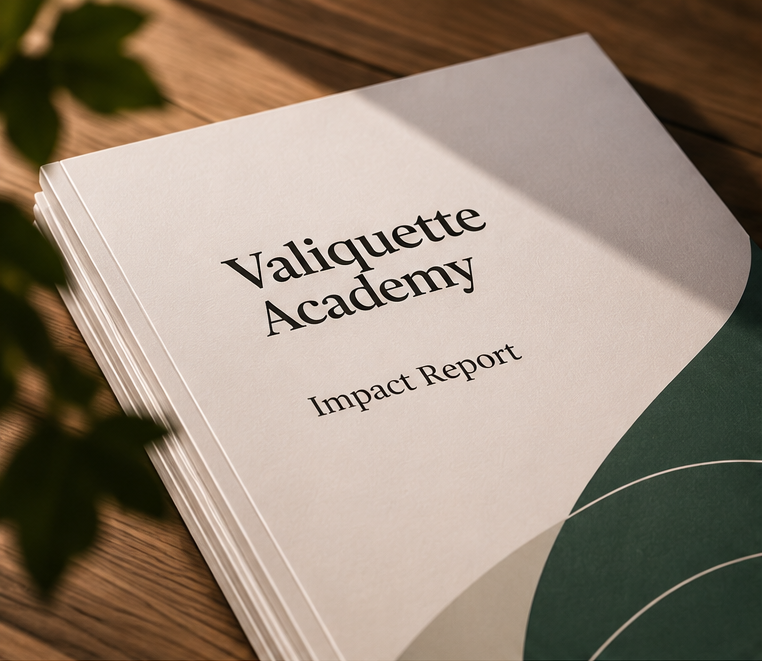
Valiquette Academy is a community-based organization serving children, youth, and families in Montréal's Côte-des-Neiges–Notre-Dame-de-Grâce area. Its programming combines academic support, youth development, life skills, and community activities to help young people develop confidence, strengthen their abilities, and access opportunities.
I was engaged through Khayata Consulting to develop the research and content for the Academy's impact report, alongside funding research and organizational analysis. The work brought together program information, community context, outcomes, and organizational needs to support reporting, fundraising, and future growth.
The Challenge
Like many community organizations, Valiquette Academy operates in an environment where resources are limited, community needs are significant, and demonstrating impact is increasingly important.
The Academy had rich program information and participant feedback, but it needed to be consolidated into a clear, credible, and evidence-informed report that could communicate its value, reflect community realities, and support future funding.
My Approach
-
I began by reviewing Valiquette Academy's program descriptions, internal documents, planning materials, and existing reporting practices to develop a comprehensive understanding of its operations and objectives. This involved identifying the organization's core activities, the populations it serves, and the information available to demonstrate its contributions.
Through this review, I identified recurring themes, gaps in available information, and opportunities to present the Academy's work more systematically. The findings informed the report's structure and established a foundation for the subsequent research and analysis.
-
I conducted research into the demographic, socioeconomic, and educational characteristics of Montréal's Côte-des-Neiges–Notre-Dame-de-Grâce area. This included examining population diversity, housing conditions, educational outcomes, and barriers affecting access to academic and youth development opportunities.
Rather than simply presenting statistics, I analyzed how these conditions related to the Academy's mission and programming. This allowed the report to establish a stronger connection between the organization's activities and the needs of the community it serves.
-
I organized the Academy's programming into five interconnected areas: Academic Excellence; Character & Confidence; Life Skills & Financial Literacy; Opportunity & Career Preparation; and Community & Belonging.
This framework helped demonstrate how individual activities contribute to broader youth-development objectives. It also provided a consistent structure for presenting program information, participant experiences, available outcomes, and future priorities, creating a foundation for more systematic impact reporting.
-
I reviewed available program information and participant feedback to identify evidence of progress in areas such as academic confidence, study habits, school engagement, and leadership development. An important part of this analysis involved distinguishing between activities delivered, outcomes reported by participants or families, and longer-term impacts requiring additional evidence.
I also examined organizational capacity, including staffing, volunteer coordination, fundraising, administrative processes, and information management. This helped identify practical challenges affecting sustainability and opportunities to strengthen the Academy's operations as its programming develops.
-
I consolidated the research, program information, and organizational analysis into a structured impact-report narrative designed for funders, partners, and other stakeholders. This involved drafting and editing content, organizing findings, refining explanations, and preparing guidance for charts and visual elements.
The report also incorporated recommendations concerning outcome measurement, organizational capacity, information management, and funding priorities. My objective was to produce materials that not only communicate the Academy's work, but also provide a useful foundation for future planning and decision-making.
Key Findings & Recommendations
The research and organizational analysis identified five areas where targeted improvements could strengthen the Academy's reporting practices, operational effectiveness, and long-term sustainability.
Align funding to demonstrated needs
Maintain credible and transparent reporting
Key Finding: The Academy's programming responds to identifiable community needs, but effective fundraising requires clearly connecting those needs to program objectives and resource requirements.
Recommendation: Develop a coordinated funding strategy that identifies suitable opportunities and uses community research, program information, and outcome evidence to support funding proposals.
Strategic Value: Stronger alignment between evidence and funding priorities would improve the clarity and consistency of the Academy's fundraising communications.
Key Finding: Credible impact reporting requires distinguishing between program activities, participant feedback, observed outcomes, and longer-term impacts that have not yet been independently established.
Recommendation: Adopt consistent reporting practices that clearly identify evidence sources, acknowledge limitations, and communicate both achievements and areas for improvement.
Strategic Value: Transparent reporting would strengthen organizational credibility, build stakeholder confidence, and support more informed decision-making.
Strengthen outcome measurement
Key Finding: The Academy's programs contribute to several dimensions of youth development, but existing information does not always allow outcomes to be measured consistently over time.
Recommendation: Establish a practical evaluation framework with clear indicators for each program area, supported by standardized feedback surveys, participation records, and periodic assessments.
Strategic Value: More consistent measurement would strengthen impact reporting, support program improvements, and provide funders with clearer evidence of progress.
Improve information management
Key Finding: Program information, participant feedback, and operational records can be difficult to consolidate when maintained across different documents and processes.
Recommendation: Introduce more standardized data collection and reporting practices, supported by a centralized information management system appropriate to the Academy's resources.
Strategic Value: Better information management would reduce administrative duplication, improve reporting accuracy, and support more efficient planning and funding applications.
Invest in organizational capacity
Key Finding: The Academy's ability to sustain and expand its programming depends on sufficient staffing, administrative support, volunteer coordination, and operational resources.
Recommendation: Develop a phased capacity-building plan that prioritizes immediate operational needs while identifying longer-term investments in staffing, systems, and organizational development.
Strategic Value: A more structured approach would help the Academy manage growth, reduce operational pressures, and maintain consistent program delivery.
Work Delivered
Community and educational research
Review and synthesis of organizational documents
Development of impact-report content and structure
Organization of the Academy's five program areas
Integration of program outcomes and participant feedback
Analysis of organizational capacity and sustainability
Funding-opportunity research
Recommendations on reporting and organizational development
Written content and visual guidance for the design process
Project Value
The engagement brought together organizational information, external research, and program-related evidence into a consolidated reporting framework.
The resulting materials help Valiquette Academy communicate its work more clearly, explain the needs it addresses, and present organizational priorities to funders and partners.
The project also identified practical steps to strengthen future measurement, information management, and organizational planning.